
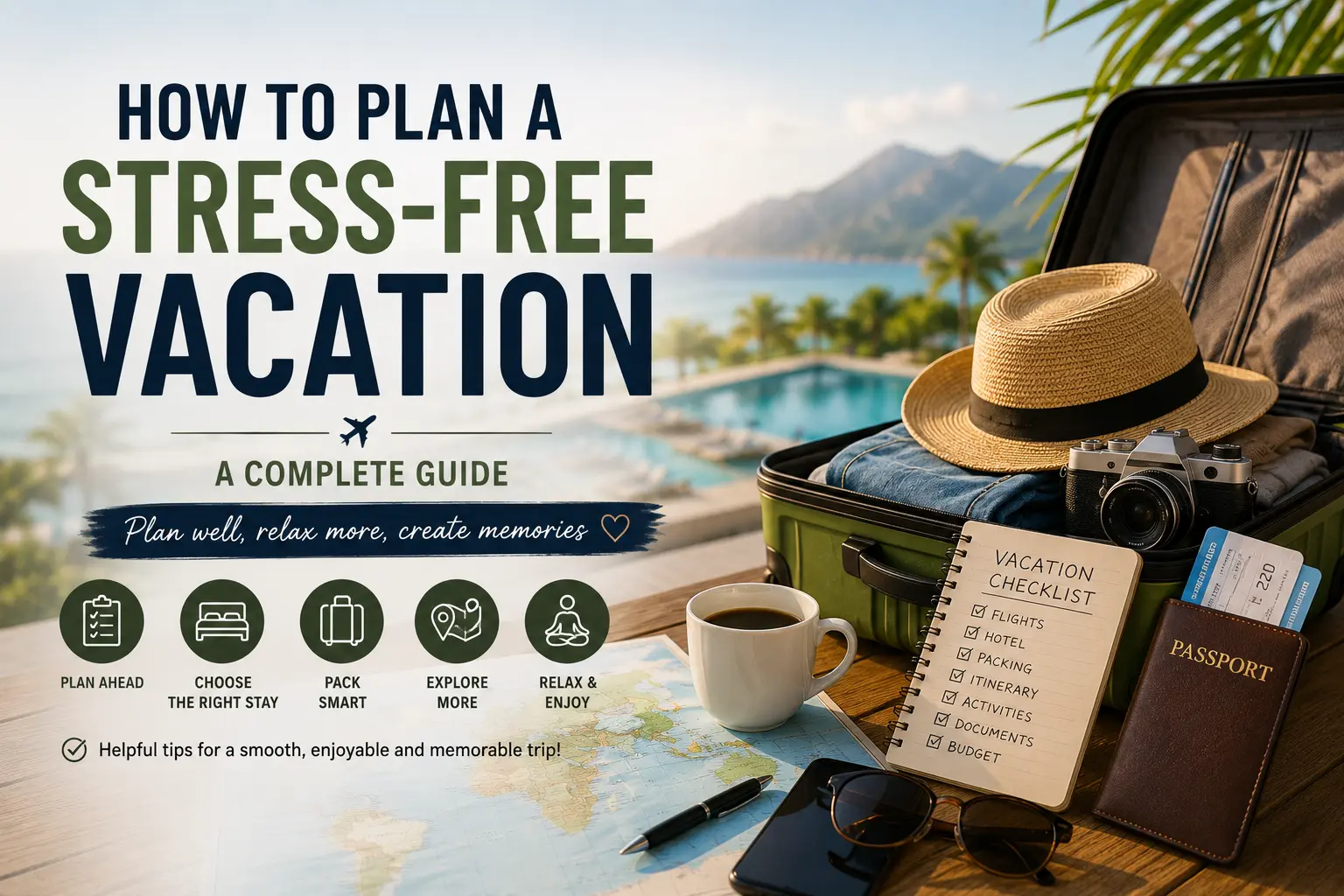
How to Plan a Stress-Free Vacation: A Complete Guide
A vacation is meant to help you relax, explore new places, and spend quality time with the people you care about. But without proper planning, travel can sometimes become stressful.
From choosing accommodation and creating an itinerary to packing your bags and managing your budget, a little preparation can make a big difference.
The good news is that planning a stress-free vacation doesn’t have to be complicated. With a few simple steps, you can organize your trip while still leaving plenty of room for relaxation and spontaneity.
1. Decide What Kind of Vacation You Want
Before making any bookings, think about what you want from your vacation.
Do you want to relax by a pool, explore new places, spend time with family, enjoy a romantic getaway, or experience adventure?
Knowing your travel purpose will help you decide:
- Where to stay
- How long to travel
- What activities to plan
- How much to spend
- What to pack
Having a clear idea of what you want makes the rest of your planning much easier.
2. Set a Realistic Budget
Creating a budget before your trip can help prevent financial stress.
Consider expenses such as:
- Accommodation
- Transportation
- Food and drinks
- Activities
- Shopping
- Travel insurance
- Emergency expenses
Keep a small amount aside for unexpected costs. This gives you extra flexibility if your plans change.
3. Choose Your Accommodation Carefully
Your accommodation can have a major impact on your overall travel experience.
When choosing a hotel, consider:
- Location
- Room type
- Amenities
- Guest reviews
- Dining options
- Parking
- Check-in and check-out times
- Cancellation policies
Don’t simply choose the cheapest option. Look for accommodation that provides good value and matches your travel needs.
4. Book Important Things in Advance
Popular hotels, flights, trains, and attractions can become busy during holidays and peak travel periods.
Booking important parts of your trip in advance can give you peace of mind.
Consider booking:
- Hotel accommodation
- Flights or train tickets
- Airport transfers
- Popular attractions
- Special dining experiences
However, you don’t have to plan every single detail months in advance. Leave some flexibility for spontaneous experiences.
5. Create a Flexible Itinerary
An itinerary can help you stay organized, but don’t make it so detailed that your vacation feels like a schedule you have to follow.
Choose a few important activities for each day and leave some free time.
For example:
Morning: Explore a local attraction
Afternoon: Lunch and relaxation
Evening: Dinner or leisure activity
A flexible itinerary gives you structure while still allowing you to slow down when you want to.
6. Check the Weather Before Packing
Weather can affect your clothing choices and planned activities.
Before leaving, check the expected weather conditions and pack accordingly.
You may need:
- Comfortable clothing
- Light or warm layers
- Comfortable footwear
- Sunglasses
- Umbrella
- Jacket
- Appropriate accessories
Packing according to the weather can help you avoid unnecessary purchases during your trip.
7. Pack Smart
Overpacking can make traveling more difficult.
Create a checklist before packing and focus on essentials such as:
- Travel documents
- Clothes
- Toiletries
- Medicines
- Phone and charger
- Power bank
- Comfortable shoes
- Personal-care items
Try to pack versatile clothing that can be used for different activities.
8. Keep Important Information Easily Accessible
Keep your important travel information organized in one place.
This may include:
- Hotel booking confirmation
- Transportation tickets
- Identification documents
- Emergency contacts
- Travel insurance information
- Important phone numbers
You can keep digital copies on your phone while also carrying physical copies when appropriate.
Having everything accessible can save time when you need it.
9. Don’t Try to See Everything
One common vacation mistake is trying to visit too many places in a short amount of time.
Instead of rushing from one attraction to another, choose the experiences that matter most to you.
A slower trip can give you more time to:
- Enjoy your surroundings
- Try local food
- Relax
- Take photos
- Spend time with your companions
- Discover unexpected experiences
Remember, a vacation isn’t a competition to see as many places as possible.
10. Leave Time for Rest
Rest should be part of your itinerary.
After a long journey or busy day, give yourself time to relax at your accommodation.
You could enjoy a quiet meal, read a book, take a walk, use the hotel’s amenities, or simply spend some time doing nothing.
Sometimes the best part of a vacation is having nowhere you need to be.
11. Prepare for the Unexpected
Even the best-planned vacation can have unexpected changes.
Flights may be delayed, weather can change, or an attraction may be closed.
Instead of letting these situations ruin your trip, try to have a backup plan.
For example, keep a few alternative activities in mind or allow extra time between important bookings.
Flexibility can turn an unexpected change into a new experience.
12. Disconnect and Enjoy the Moment
Technology is useful while traveling, but constantly checking emails, notifications, and social media can prevent you from fully enjoying your vacation.
Whenever possible, take some time away from your phone.
Enjoy conversations, scenery, food, activities, and the people around you.
You can always catch up on notifications later. Your vacation time is limited, so make the most of it.
Final Vacation Checklist
Before leaving, take a few minutes to check:
☐ Accommodation booked
☐ Transportation confirmed
☐ Travel documents ready
☐ Budget prepared
☐ Weather checked
☐ Packing completed
☐ Important contacts saved
☐ Activities planned
☐ Emergency arrangements considered
☐ Enough free time included
Final Thoughts
Planning a stress-free vacation isn’t about controlling every part of your trip. It’s about preparing for the important things while leaving enough flexibility to enjoy yourself.
Choose suitable accommodation, create a realistic budget, pack smart, plan your activities carefully, and remember to leave time for rest.
Most importantly, don’t let the pressure of having a “perfect” vacation stop you from enjoying the journey.
Plan ahead, stay flexible, and give yourself permission to relax. That’s what a great vacation is all about.